


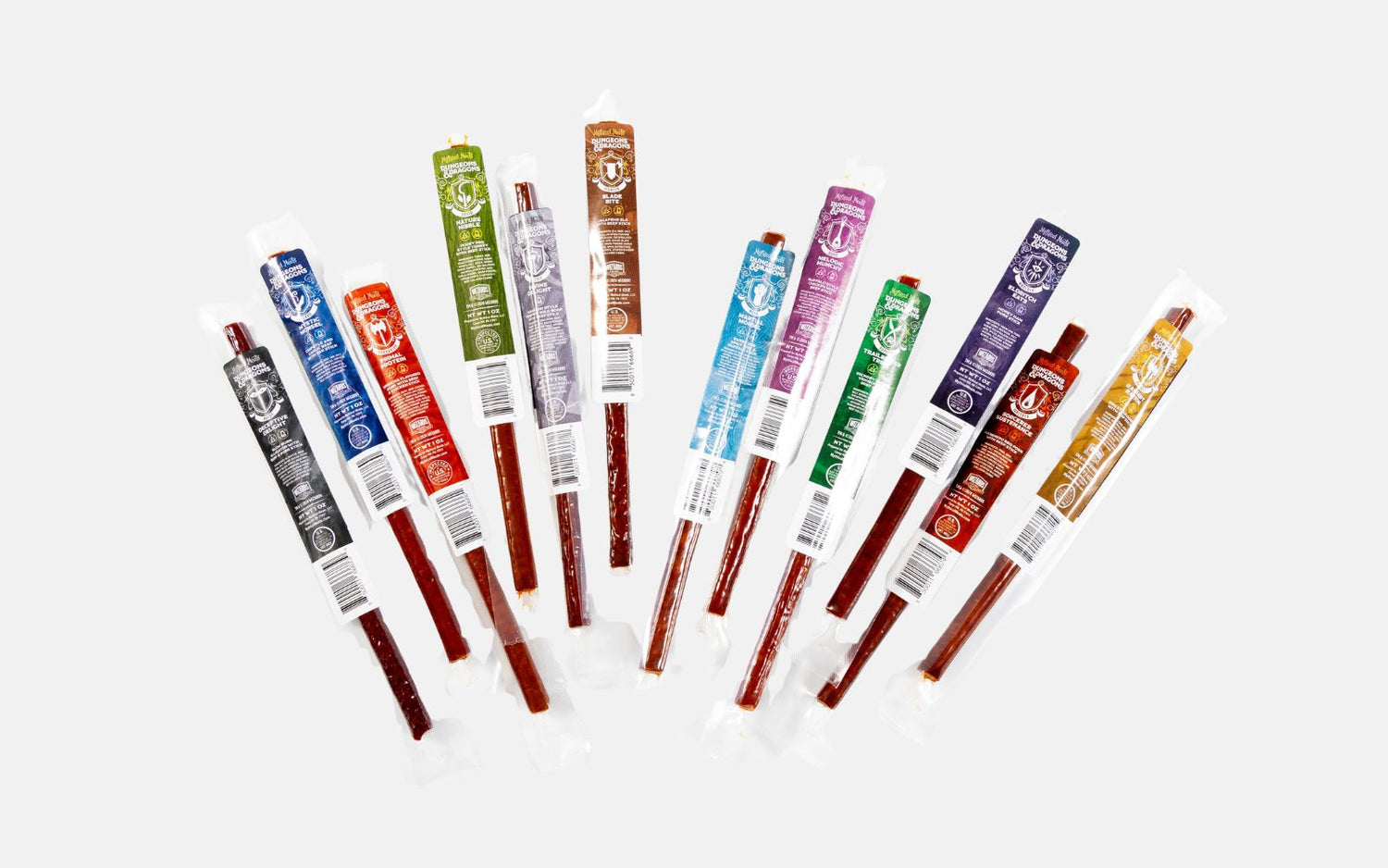
You've eaten beef. You've eaten chicken. You've probably eaten more turkey jerky than you'd like to admit. And yet, somewhere beyond the grocery store meat aisle is a whole realm of flavor most people never bother to explore: elk, bison, venison, wild boar, ostrich, and other game meats that taste nothing like what's in your fridge right now.
That's exotic game meat. And once you try it, the regular stuff starts to feel a little...ordinary.
At Mythical Meats, we built our whole business around that moment of "wait, THIS is what ostrich tastes like?" Every stick is naturally hardwood smoked, crafted in small batches, and themed after the legendary creatures that inspired it. Less science fair, and always more adventure.
What Counts as "Exotic" Game Meat?
Anything that isn't beef, pork, or standard poultry. Elk, bison, venison, wild boar, ostrich, foie gras, frog legs, alligator, duck. Some of it comes from responsibly managed wild populations, some from specialty farms built around quality over volume. Either way, you're not getting the mass-produced flavor of the supermarket aisle. You're getting meat with a personality.
The good news: you don't need to track it down at a fancy butcher anymore. Premium snack sticks have made trying exotic meat as easy as opening a bag.
Why Bother Trying It?
Because lean protein that actually tastes interesting is rare. According to Harvard Health, quality protein sources support satiety and muscle maintenance as part of a healthy diet.1 Wild game meats tend to deliver on that front naturally, without needing the protein-bar engineering.
But honestly? Most people try exotic meat because they're bored of the usual options and want something with a story. That's reason enough.
The Lineup: Meet Your Meats
Elk tastes like beef's more refined cousin. Mild, slightly sweet, clean finish. This is where most first-timers start because it's familiar enough not to scare anyone off, but different enough to notice.
Bison (Buffalo) is the hearty middle ground. Beefy, rich, naturally lean, and a definite upgrade from standard jerky if you want something with more depth.
Venison is the one true outdoorsmen swear by. Earthy, bold, a little wild (literally). If you want the full "this came from the woods" experience, start here.
Ostrich will mess with your head a little. It's a bird that tastes like lean beef, not chicken. Mild, tender, and one of the most approachable exotic meats out there despite sounding like the strangest one on the list.
Wild Boar brings the heat for people who've already worked through the rest of the list and want something punchier.
Not Sure Where to Start? Grab a Sampler
This is the move for first-timers. A sampler pack puts several game meats side by side so you can figure out what you actually like before committing to a full case of anything. It's also the easiest "I don't know what to get you" gift for the hunter, gamer, or adventurous eater in your life.
Built for Actual Adventures, Not Just Snack Time
Whether you're hiking, gaming, road-tripping, or just trying to survive a Tuesday afternoon at your desk, game meat snack sticks hit different than your average bag of chips. Naturally lean, genuinely high-protein, and smoked instead of seasoned into oblivion.
How to Spot the Good Stuff
Not every "exotic meat" product on the shelf is worth your money. The American Heart Association recommends lean protein as part of a balanced diet,2 which means quality and preparation matter more than the marketing on the bag. Before you buy, look for:
- Real game meat (elk, bison, ground venison, wild boar, ostrich steaks) as the actual first ingredient, not a garnish
- Naturally hardwood smoked, not "smoke flavoring" from a bottle
- Short, honest ingredient lists
- Small-batch production, not mass-line filler
- A brand that actually specializes in this category instead of bolting "exotic" onto a regular jerky line
FAQ
What counts as exotic game meat?
Anything outside the beef/pork/poultry standard: elk, bison, venison, wild boar, ostrich, duck, alligator, and similar specialty proteins.
Is game meat healthy?
Most game meats are naturally lean and high in protein. Always check the label, since recipes (and added sugar) vary by brand.
What should a beginner try first?
Elk or ostrich. Both are mild and familiar enough not to overwhelm anyone. Bison is the next step up for beef lovers, and venison or wild boar are where things get bold.
Where can you actually buy this stuff?
Online, mostly. Specialty brands like Mythical Meats ship sampler packs and snack sticks straight to your door, no butcher trip required.
Does exotic meat go beyond snack sticks?
Definitely. Beyond jerky and snack sticks, you'll find cuts like alligator tenderloin, elk ground, frog legs, and even foie gras for cooking at home.
Ready to Taste the Legend?
You don't need a hunting trip or a passport to try something genuinely different. Browse the Mythical Meats variety packs, pick a creature that calls to you, and find out what you've been missing.
No matter where your adventure begins, the result is the same: premium exotic game meat snacks crafted to help you Taste the Legend.
References
- health.harvard.edu/diet-and-nutrition/high-protein-foods-the-best-protein-sources-to-include-in-a-healthy-diet
- heart.org/en/healthy-living/healthy-eating/eat-smart/nutrition-basics/picking-healthy-proteins