


The snack aisle doesn't have a quality problem. It has an honesty problem.
Most meat sticks are built to look healthy. Short paragraph on the front of the package, a protein number in bold, maybe a "no artificial flavors" badge. Flip it over and the ingredient list tells a different story.
The difference between a healthy snack stick and a dressed-up snack food comes down to what's inside the casing.
The healthiest beef sticks share a few non-negotiable traits: high protein density, short ingredient lists, minimal added sugar, and real smoking methods instead of artificial shortcuts.
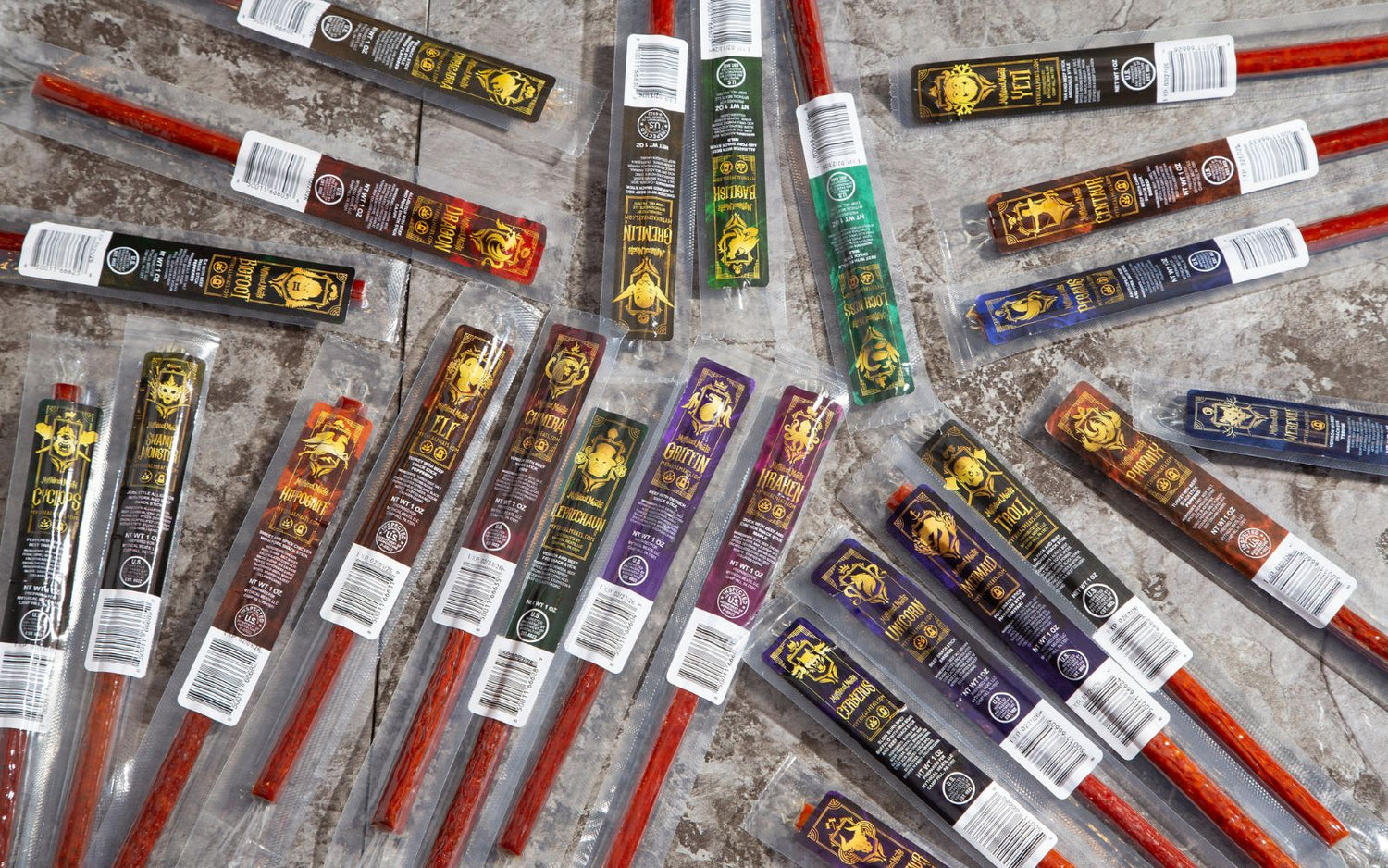
Mythical Meats was built around exactly this standard by a father and daughter who wanted a snack stick they could stand behind. That meant exotic proteins, real hardwood smoke, and zero shortcuts.
➡️ Check out the Mythical Meats Original Variety Pack: 10 original beef sticks, all gluten free, individually wrapped.
Are Beef Sticks Healthy?
Short answer: they can be. But "healthy" depends entirely on which meat stick you pick up.
A well-made beef stick delivers 8 to 12 grams of protein per stick, usually under 100 calories, and a macronutrient profile that works.
This is helpful whether you're tracking keto macros, managing blood sugar, or just trying to eat fewer processed carbs between meals.
The meat stick market ranges from genuinely high-quality, craft-made products all the way down to gas station mystery tubes with ingredient lists that read like a chemistry exam.
The best meat sticks ones are legitimately one of the cleanest portable protein sources available. The worst ones are just hot dogs in a different shape. Most of what fills the middle of that shelf is closer to the second category than brands want you to know.
What Makes a Beef Stick Healthy?
Most articles throw around "high protein" and "low-carb" without explaining what separates a quality stick from a hyper-processed one.
Read the Ingredient Panel First
Flip the package over. The first ingredient should be actual meat, listed by name. Beef, venison, elk, turkey.
If the first ingredient is "mechanically separated chicken" or "beef protein isolate," you're holding a reformed paste in a tube.
A green-flag panel
Beef, salt, spices, starter culture, sea salt, garlic, black pepper, paprika.
A red-flag panel
Mechanically separated chicken, corn syrup, soy protein isolate, Red 3, sodium nitrite, smoke flavoring.
A quality meat stick shouldn't need more than 8 to 12 ingredients. Once you're past 15, that product needs a lot of chemical help to taste like food.
The brands winning on shelf space are not always the ones winning on quality. Those are two very different competitions.
➡️ Any gamers in the house? Check out our Dungeons & Dragons meat sticks.
Real Smoke vs. Fake Smoke
"Natural hardwood smoked" means the stick spent real time in a smokehouse. "Smoke flavoring" or "liquid smoke" means someone added a compound during processing.
One is a craft method. The other is a factory shortcut. You can taste the difference after your first properly smoked stick. After that, liquid smoke versions just taste like the idea of smoke.
Protein-to-Calorie Ratio
The benchmark that matters: at least 8 grams of protein per 100 calories. That ratio matters because protein is what keeps you full between meals.
When a stick dips below that, more of its calories come from saturated fat or fillers than actual muscle meat.
Here's where protein source matters more than most people realize. A stick hitting 10g protein from elk or venison is a fundamentally different product than a stick hitting the same number from soy protein isolate.
A good beef stick runs 70 to 110 calories with 8 to 12 grams of protein. Per serving size, that puts it ahead of most protein bars, nuts, or trail mix.
Sugar and the Fermentation Question
You'll see sugar listed on even the cleanest beef sticks. But there's a real distinction between added sugars used as a sweetener and sugar that feeds the fermentation process.
During curing, a small amount of sugar feeds beneficial bacteria that lower the pH of the meat. This gives fermented sticks their characteristic tang and firm texture, and makes them shelf-stable.
The sugar gets consumed by the bacteria. It's not in the final product.
Watch for sweetness beyond curing
Some brands load sticks with brown sugar, corn syrup, or honey to taste more like candy than meat.
The healthiest beef sticks keep sugar under 1 gram per stick. True zero sugar meat sticks are rare because of fermentation chemistry, so under 1 gram is the practical benchmark.
Sodium: Necessary vs. Excessive
Salt is not optional. It's part of curing, it controls moisture, and it prevents bacterial growth.
The USDA classifies properly cured meat sticks as shelf-stable specifically because of this salt and acid balance.
Most meat sticks land between 300 and 500 milligrams per stick. That's reasonable for a cured meat snack.
Above 600, the product is leaning on salt to compensate for bland ingredients, which is beyond preservation purposes.
For context, the American Heart Association suggests1 a daily limit of about 2,300 milligrams. A single stick at 400mg is about 17% of that.
Grass-Fed Beef Sticks: Worth the Premium?
Grass-fed beef sticks tend to have a slightly better omega-3 to omega-6 ratio and leaner meat. But the measurable difference in a 1-ounce stick is small.
Grass-finished beef takes it further, meaning cattle never transitioned to grain, but in a snack stick format the nutritional gap narrows.
Where it matters more is what it signals about the producer. Brands sourcing grass-fed beef generally pay closer attention to supply chain and production standards.
It's a quality indicator, not a magic upgrade. And if you're already buying alligator, ostrich, or elk, the grass-fed conversation almost becomes irrelevant. You're past the commodity tier.
Red Flags in "Healthy" Beef Sticks
Ingredient List Length
If the panel wraps around the package, that's a warning. Real meat, spices, and smoke don't need 25 supporting additives.
Mechanically Separated Meat
Meat pressure-blasted off the bone into a paste. It's legal and common, but a very different product from a stick made from actual cut meat.
Protein Isolates and Soy Fillers
Some brands bulk up protein numbers with soy protein isolate. Cheaper than real meat, and it lets them print a higher count on the label.
But you're not getting that protein from the source you think. It's a label trick rather than a quality standard.
Artificial Colors and Preservatives
Ingredients like Red 3, BHT, or sodium erythorbate are common in mass-market sticks. They keep the meat looking pink but add nothing to nutrition or flavor.
The Texture Test
A well-made beef stick has a nice bite and a dry, clean finish. The chew should feel like actual meat.
If it's rubbery, slimy, or leaves greasy residue on your fingers, the production quality isn't there.
Healthy Compared to What?
A beef stick isn't a salad. It's competing with the other things you grab when you need something portable and satisfying, whether that's a road trip glove-box snack, hiking fuel, or desk drawer backup.
Or, for a large chunk of the people buying Mythical Meats, something that fits in a dice bag and doesn't require pausing the campaign.
Against chips
Empty carbs, zero protein, blood sugar crash. No contest.
Against granola bars
Most are sugar delivery systems with oats. A beef snack with under 1g sugar and 10g protein does more nutritional work per bite.
Against protein bars
Closer comparison, but check the sugar and the ingredient list. Many are engineered food products. A clean beef stick is closer to actual food.
Against beef jerky
Jerky is leaner and chewy in a different way. Beef sticks include more fat for flavor and mouthfeel, and are fermented rather than dried.
Some people call them jerky sticks interchangeably, but the texture and process are different.
If you're following paleo or Whole30, beef sticks can qualify, but check for added sugars, soy, and dairy in the specific product.
What the Healthiest Beef Sticks Look Like
Real proteins listed first. Naturally smoked over hardwood. Sugar under 1 gram. Sodium in a reasonable range. Ingredient list short enough to read in one breath.
The best ones go further than checking boxes. They bring flavor variety that makes you want to eat them, not just tolerate them as a healthy snack obligation.
Where Mythical Meats takes a different approach
Most snack stick brands give you three versions of the same stick. Original, peppered, and teriyaki. They've been doing it for 30 years.
Instead of three flavors of the same stick, we build around exotic proteins and bold combinations: 37 unique snack sticks, with proteins like alligator, venison, ostrich, duck, antelope, and wild boar.
Flavors range from jalapeno elk to maple duck to smoked beef with camel to teriyaki wild boar.
Every stick is naturally hardwood smoked, small-batch, no MSG, no artificial flavors, no liquid smoke.
Protein lands in the 8 to 12 gram range, sugar stays under 1 gram, and the Original Variety Pack is completely gluten-free.
No other brand carries an official Dungeons & Dragons license, sells in 400 to 600 independent game stores, and shows up at Renaissance fairs and Viking festivals where our biggest fans hang out.
30-Second Label Audit
Before you buy any meat stick, run this quick check:
- First ingredient: named, whole meat? Move on.
- Total ingredients: under 12 is strong. Over 20, be skeptical.
- Sugar line: under 1g per serving means fermentation, not added sweetness.
- Smoking method: "naturally smoked" beats "smoke flavoring" every time.
- Certifications: Certified Gluten-Free, Non-GMO Project Verified, or Whole30 Approved signal a brand willing to submit to outside scrutiny.
Frequently Asked Questions
Are beef sticks good for weight loss?
High protein promotes satiety and the low sugar count avoids insulin spikes. Useful as a between-meal snack if you factor the calories into your daily total.
Are beef sticks keto friendly?
Most quality sticks are keto by default. Under 1g sugar, minimal carbs. Check labels on flavored varieties (especially teriyaki or sweet BBQ glazes) since marinades can add carbs.
How long do beef sticks last?
Unopened, several months at room temperature. Once opened, consume within a few days. Shelf stability comes from the curing and fermentation process.
Do beef sticks need refrigeration?
Not while sealed. Curing makes them shelf-stable. That's what makes them a better backpacking and road trip snack than most alternatives. Refrigerate after opening to extend freshness.
Are beef sticks gluten free?
Many are, but gluten can hide in seasonings, binders, or soy sauce marinades.
Look for a Certified Gluten-Free seal if cross-contamination is a concern.
Are nitrates in beef sticks bad?
Many "nitrate-free" products still use celery powder, a natural nitrate source that converts to nitrites during processing.
The FDA allows this labeling distinction. Health risk is dose-dependent and still debated. Look for minimal processing and short preservative lists.
What about turkey sticks or pork sticks?
Turkey sticks run leaner with less saturated fat. Pork sticks have a richer flavor profile.
Same quality rules apply: check ingredients, sugar, and smoking method.
➡️ Looking for meat sticks that pass the quality test? Browse the full Mythical Meats collection and see what 37 flavors of properly made snack sticks look like.
References
1. American Heart Association: How Much Sodium Should I Eat Per Day?