


Most people like beef jerky. They enjoy the experience. Sometimes, they hate the bag they bought once, the one that was dried out, overly chewy, or tasted like a campfire. Then they swear off the whole category.
This guide walks through what separates a good bag from a bad one, so you can shop with some confidence instead of just hoping.
Ready to taste the legend? Shop the beef jerky lineup.
What is Beef Jerky?
Strip away all that branding and jerky is a preservation method first, a meat snack second. Dry the moisture out of a piece of meat and you starve the bacteria that would otherwise spoil it. That's the whole trick, and people have been doing it since long before anyone thought to put it in a foil pouch.
Beef jerky is lean beef, trimmed of fat, sliced, seasoned, and dried until most of its moisture is gone. That low moisture level (what food scientists call water activity) is what lets it sit on a shelf for months without refrigeration. Everything else, texture, flavor, marinade, is where the real decisions happen.
The word itself comes from ch'arki, a Quechua term for dried, salted meat used by Indigenous peoples across the Americas for centuries. (1)
What's changed is the range of what shows up in a bag today. Beyond classic beef, jerky today comes from venison, elk, and other wild game, with buffalo jerky and turkey jerky increasingly easy to find outside dedicated game shops, in flavor lanes running from smoky and sweet to spicy and downright fiery.
The cut, the marinade, and the drying method all shape what ends up in your mouth. Understanding those variables is the difference between a bag you finish in one sitting and one that dies quietly in a drawer.
The Texture Spectrum (This Is the Part Nobody Explains)
Texture is typically the single biggest reason people love or hate a certain jerky. Here's the breakdown so you know what you're buying before you open the bag.
Tender and moist
Thicker cuts, shorter drying time, closer to steak than leather. This is the style that wins over people who swear they don't like jerky. Tradeoff: more moisture means a shorter window once opened, so eat it within a few days.
Balanced and chewy
The zone most regular jerky eaters land in. Enough resistance to feel substantial, not so much that your jaw files a complaint. This is the sweet spot for road trips, hikes, and snacking.
Dry and traditional
Frontier-style, dense, and built for people who consider chewing part of the experience. This is traditional jerky at its most literal: longer drying concentrates the flavor and stretches the shelf life.
If a jerky ever struck you as "too tough," you probably landed here when you wanted tender or balanced instead. Knowing where you fall on this spectrum before you buy saves you a lot of disappointment and a few dollars.
Jerky vs. Biltong: Cousins, Not Twins
These two get confused constantly, and it's a fair mix-up since both are dried, cured meat. The process is where they split.
Jerky is marinated, then dried with heat, in a smoker, dehydrator, or oven. That heat is what gives jerky its firm bite and smoky depth.
Biltong is a South African tradition: meat cured in vinegar, spices, and often worcestershire sauce, then air-dried with no heat at all. The result is softer and tangier, with a flavor profile that leans savory rather than smoky.
Neither wins. If you want bold and smoky, reach for jerky. If you want something with a vinegar-forward tang and a more tender chew, biltong is your lane.
How Beef Jerky Gets Made
Making beef jerky is simple in theory and unforgiving in practice, which is why quality varies so much bag to bag.
It starts with lean cuts trimmed of visible fat, since fat doesn't dry well and speeds up spoilage. The meat gets sliced, with the grain for a chewier result or against it for something more tender. Then it's marinated, sometimes for a few hours, sometimes overnight, and this is where a brand's personality actually shows up. Finally, it's dried, often with hardwood smoke, like hickory, over low heat for hours, which builds a deeper flavor than a quick pass through a commercial dehydrator. A heat step at the end follows USDA guidance for eliminating harmful bacteria.
The gap between an average bag and a high-quality one usually comes down to patience and sourcing, not a secret ingredient.
Unopened, commercially packaged jerky typically holds for 9 to 12 months thanks to low moisture and stable packaging. Once you open it, the clock starts: a few days at room temperature, or up to one to two weeks refrigerated in an airtight container.
Off smells, visible mold, sliminess, or a stale bite mean it's time to toss it. When in doubt, don't risk it.
Trim fat
Fat doesn't dry well, so it goes first.
Slice
With the grain for chew, against it for tender.
Marinate
Hours, sometimes overnight. This is where flavor happens.
Smoke & dry
Low heat, smoke, for hours.
Heat lock
A final safety step, every batch.
Is Beef Jerky Healthy?
Depends on the bag. Here's what to check before you decide.
Protein
This is jerky's strongest case, and a big reason it's become a staple for the keto, carnivore, and high-protein crowd. Most varieties run 8 to 15 grams of protein per serving in a lean, low-fat format that survives a backpack without refrigeration. Hard to beat for hikers, gym-goers, road trippers, or anyone who needs food that doesn't need a fridge.
Sodium
Salt is a natural preservative and part of how jerky gets preserved, so it's never absent, but brands vary a lot in how much they lean on it. Check the nutrition panel and look for something reasonable, not a bag that eats half your daily sodium in three pieces.
Sugar
Glazed varieties in particular can carry more sugar than you'd expect, which matters if you're eating keto or strict carnivore. If zero sugar matters to you, skip the glazed styles and check the label first.
Ingredients
A short list (beef, salt, spices) is a good sign. A long one that reads like a chemistry set is worth a second look. Some marinades lean on soy sauce for depth, which is worth knowing if you're avoiding gluten.
Jerky can absolutely fit a smart diet, keto, carnivore, or otherwise. Nobody wrecks their macros with a handful of good jerky. Finishing a sugary bag without noticing is where you can run into trouble.
How to Choose a Bag
Run through this before you buy. It takes thirty seconds and can be the difference between the best jerky for you and a bag that sits half-eaten.
- Texture first. Tender, balanced, or tough? If you're not sure, start balanced. It's the safest entry point.
- Flavor lane. Classic, original beef jerky flavor, something with heat, something sweet, or something you've never tried?
- Sodium tolerance. If you're watching salt, this is non-negotiable. Check the panel before anything else.
- Whole muscle vs. formed. Whole-muscle jerky is sliced from intact cuts and has natural grain. Formed jerky is ground meat pressed into strips. Neither is wrong, they're just different animals (pun intended).
- Occasion. A single bag for the trail or the desk, a gift box for someone else's shelf, or a mega pack if you want the whole combo without picking a favorite.
Our Beef Jerky Lineup
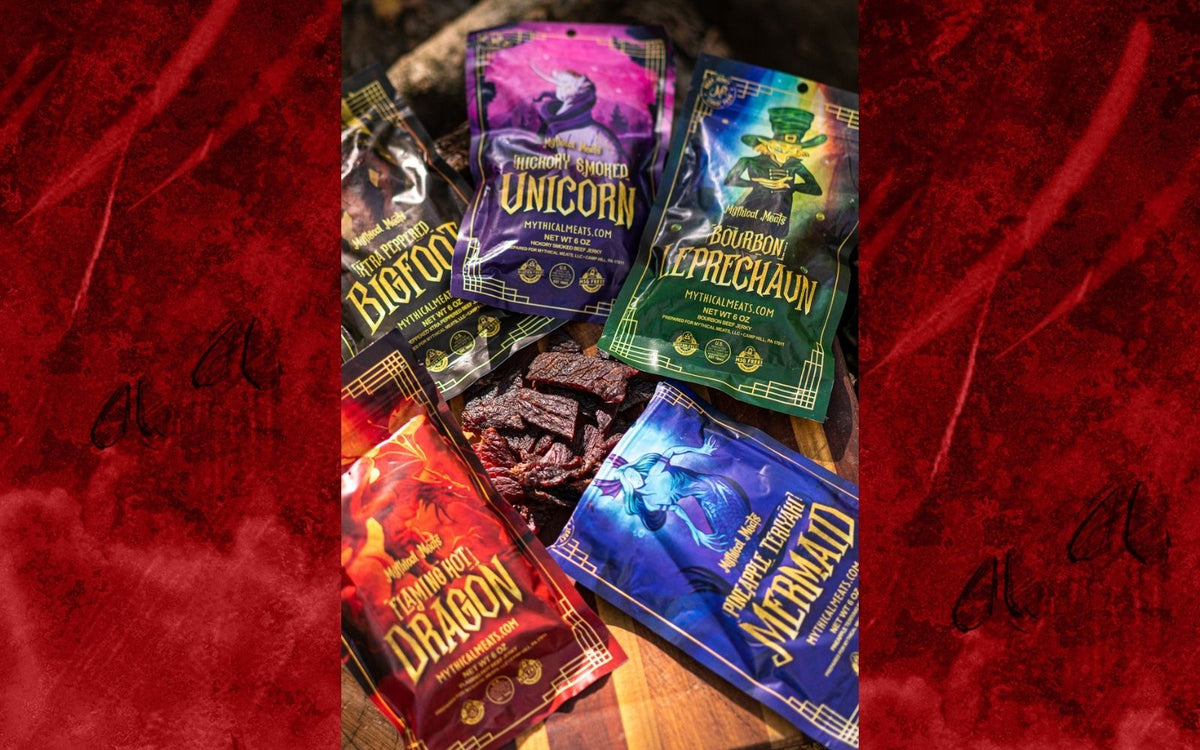
We keep our beef jerky line small and hand-cut on purpose: five flavors, small-batch, whole-muscle beef.
- Unicorn (smoky and succulent)
- Dragon (fiery heat)
- Mermaid (sweet and zesty)
- Leprechaun (bourbon-kissed sweetness)
- Bigfoot (black pepper and smoke, our closest thing to an extra peppered beef jerky)
Available in 2 oz and 6 oz bags, or the 6 oz Mega Pack if you want all five without picking a favorite.
Want to go further off the map? Prehistoric Prime Cuts take that same teriyaki-forward approach, think teriyaki beef jerky's flavor profile, and apply it to wild boar, turtle, and swordfish instead of beef, for the truly adventurous eater.
And if beef jerky's got you thinking about what else is out there, our meat stick lineup covers 25 mythical creatures offering 15 different proteins, from alligator to elk to smoked beef. If beef sticks are more your speed, Unicorn (smoked beef) is in the mix. Craving BBQ or jalapeño? That's meat stick territory, not our jerky line, but it's there if you want it. Different snack, same Taste the Legend standard.
Frequently Asked Questions
Q: What does "jerky" mean?
A: The word comes from ch'arki, a Quechua term for dried or salted meat, used by Indigenous peoples across the Americas long before commercial packaging existed. Today it refers to lean meat trimmed, seasoned, and dried to remove moisture for shelf-stable storage.
Q: Is beef jerky good for keto or carnivore diets?
A: Yes, in most cases. Beef jerky is high in protein and naturally low in carbs, which fits both keto and carnivore approaches well. The exception is sugar-glazed flavors, which can sneak in more carbs than you'd expect, so check the label if you're tracking closely.
Q: Why is beef jerky so expensive?
A: Meat loses roughly 60 to 70% of its weight during drying, so it takes a lot more raw beef than you'd think to produce a finished bag. Better cuts, real smoke, USDA-required safety steps, and slower processing all show up in the price.
Q: How long does beef jerky last?
A: Unopened and commercially packaged, 9 to 12 months. Once opened, eat it within a few days at room temperature, or refrigerate in an airtight container for up to one to two weeks.
Q: What's the difference between jerky and biltong?
A: Jerky is marinated and dried with heat. Biltong is cured in vinegar and spices, then air-dried without heat, giving it a softer texture and a tangier, less smoky flavor.
Q: Is your beef jerky gluten-free?
A: Check the label for each flavor. Ingredients and allergen callouts vary by product, and we'd rather you check the actual packaging than take a general guide's word for it.
Have more questions? Our full FAQs page covers shipping, allergens, and more.
Ready to taste the legend? Add a bag to your cart and head to checkout, or go exotic with Prehistoric Prime Cuts.
References
1. ndsu.edu/agriculture/extension/publications/jerky-native-american-inspired-snack-we-all-can-enjoy-today