


People who try elk for the first time usually say some version of the same thing: “I expected it to taste wilder than this.”
That is the elk paradox. It is a genuine game meat, hunted across North America, leaner than beef, and unmistakably different from anything you find in the average grocery store. But it does not taste like a challenge. It tastes like the best version of a familiar flavor, clean, mildly sweet, with a finish that does not linger the way venison does or hit as hard as wild boar.
That is why elk snack sticks are where most people start their game meat education. And why a lot of them stop looking after that.
Ready to experience legendary flavor? Explore Mythical Meats' naturally hardwood-smoked elk meat sticks and discover why this premium game meat continues to win over adventurous eaters.
What Elk Tastes Like
Lean. Mildly sweet. Cleaner finish than beef, less fat on the back end, no pronounced gamey note unless it was handled poorly. The texture is tender rather than tough, which makes it work especially well in a smoked snack stick format where the casing and the smoke do the rest of the work.
The exotic game meat flavor sits closer to beef than venison does, which is part of why it converts so many first-timers. You get the novelty of eating something genuinely different without the adjustment period that comes with earthier game meats.
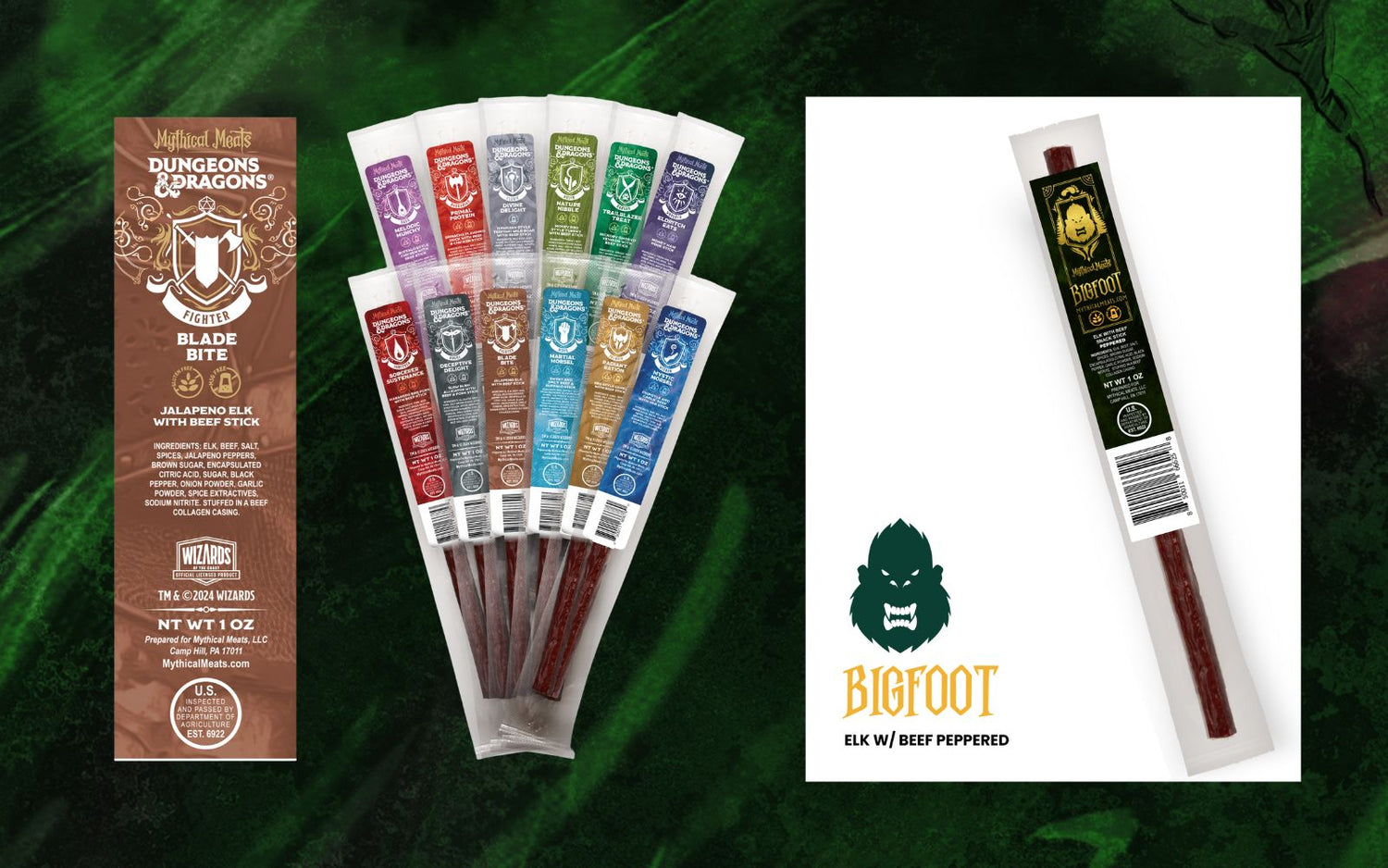
Smoked over real hardwood, the natural sweetness picks up depth without losing its clean character. The Fighter, our elk jalapeño stick from the D&D Adventurer's Rations line, as well as Bigfoot, our peppered elk & beef, is a good example of how well elk holds up against bold seasoning without disappearing behind it.
Elk Sticks vs. Beef Jerky
They solve different problems.
Beef jerky is dried whole muscle, chewy, familiar, and made from an animal everyone has eaten a hundred times. Elk snack sticks are ground meat smoked in a natural collagen casing, more tender, more consistent bite to bite, and made from something most people have not tried before.
The protein delivery is similar, but the experience is not. According to Health Central, protein-rich snacks help promote fullness and provide steady energy (1). Both formats deliver on that. But one of them also gives you a story worth telling when someone asks what you are eating.
Elk Sticks vs. Venison Snack Sticks
This comparison comes up constantly and the short answer is: elk is milder.
Both are lean game meats with genuine nutrition credentials. The American Heart Association recommends choosing lean protein sources as part of a balanced eating pattern (2), and elk and venison both clear that bar comfortably.
But venison snack sticks have an earthier, bolder flavor with more of what people mean when they say “gamey.” Elk sits back a little. It lets the smoke and the seasoning share the stage instead of dominating it.
If you have tried venison and found it a bit much, elk is the next experiment. If you have not tried either, elk is the right place to start.
How Elk Sticks Compare to Other Elk Formats
Elk shows up in a few different formats beyond snack sticks. Elk summer sausage is a popular option in specialty meat shops, thicker and more richly seasoned, closer to a charcuterie format than a grab-and-go snack. Elk jerky is another common format, chewier and drier than a stick, with more textural variation per bite.
Elk snack sticks sit between those two in terms of convenience. More portable than summer sausage, more tender than jerky, and better suited to a bag or a pocket than either one.
What to Look For Before You Buy
Elk sticks vary considerably depending on who makes them and how. A few things worth checking on the label:
- The meat should be listed first. If it appears after a beef base, you are mostly buying beef with elk flavoring added.
- Naturally hardwood smoked beats smoke flavoring every time. One has depth. The other is flat.
- Watch the additive list. Some snack sticks rely on dextrose, corn syrup solids, or MSG to hit a flavor or shelf life target. None of those are inherently dangerous, but a shorter, cleaner ingredient list, garlic powder, black pepper, sea salt, real spices, is usually a sign the meat is doing more of the work.
- No MSG, no artificial flavors. These crowd out the natural character of the elk, which is the whole point.
- Collagen casing vs. synthetic. Natural beef collagen casing gives a better bite and is more consistent than synthetic alternatives.
Is Elk a Healthy Snack?
Yes, with the usual caveat that labels vary by brand.
Elk is naturally lean, which means most elk snack sticks carry less total fat than comparable beef products and deliver solid protein per serving. For people eating keto or low-carb, elk sticks tend to fit cleanly since the sugar content is minimal and the protein-to-carb ratio is favorable. Most are also gluten-free, though that varies by recipe, so check if it matters for your diet.
When reviewing nutrition facts, the numbers worth paying attention to are protein per serving, total fat, trans fat, and sodium. Trans fat should be zero. Sodium varies more than it should across brands. Protein should clear 8 grams per stick to be worth calling a high protein snack.
Pair a healthy meat stick with trail mix, fresh fruit, or raw vegetables if you want a more complete snack. Or just eat the stick. It is already doing more than most meat snacks in its category.
Flavor Variations Worth Knowing
Elk is versatile enough to hold up across a range of seasoning profiles.
- Classic hickory smoke is the most common and a great starting point.
- Jalapeño is a natural pairing since the heat complements the mild sweetness without overwhelming it.
- Teriyaki works well with elk's natural profile for people who want something slightly sweeter.
- Garlic and peppered recipes are also common and tend to highlight the clean finish of the meat.
If you are new to elk snack sticks, start with a smoked classic or jalapeño before going further into specialty seasonings.
FAQ
What do elk sticks taste like?
Mild, slightly sweet, and sometimes cleaner than beef. Less gamey than most people expect. Hardwood smoke adds depth without covering up the natural character of the meat.
Are elk snack sticks gluten-free?
It depends on the brand and recipe. The Mythical Meats Original Variety Pack is entirely gluten-free. Other packs vary by flavor, so check the label if that matters for your diet.
Are elk sticks keto-friendly?
Generally yes. Most are low-carb with minimal sugar and solid protein per stick. Check the nutrition facts panel since values vary by brand and flavor.
Are elk sticks healthier than beef jerky?
Elk is naturally leaner than beef, which means most elk snack sticks carry less total fat per serving than comparable beef products. Protein content is similar. Sodium varies considerably by brand, so that is worth comparing on the nutrition label.
How does elk compare to venison snack sticks?
Elk is milder and less earthy. Venison has a bolder, more pronounced flavor. If you are new to game meat, elk is the easier starting point.
How should I store them?
Most individually wrapped elk snack sticks are shelf-stable until opened. Keep them somewhere cool and dry and they will hold up in a bag, drawer, or car without refrigeration.
Start Here, Keep Going
Elk snack sticks are the right first move into game meat snacking for most people. Familiar enough to be approachable, different enough to be interesting, and good enough that a lot of people never feel the need to go further.
Those who do usually end up with a drawer full of creatures.
Taste the Legend.
References
1. https://www.healthcentral.com/nutrition/the-best-high-protein-snacks-for-energy
2. https://www.heart.org/en/healthy-living/healthy-eating/eat-smart/nutrition-basics/picking-healthy-proteins