


Quick answer: Unopened, store-bought jerky keeps in a cool, dry pantry until the best-by date. Once opened, press out the air, seal it tight, and refrigerate for 1 to 2 weeks. Homemade jerky should always go in the fridge, no exceptions, and gets eaten within 1 to 2 weeks. For long-term storage of any type, vacuum seal and freeze, which extends peak quality by months. Air, moisture, heat, and light are what actually cause spoilage, so keeping jerky sealed and cool matters more than which format it came in.
Good beef jerky isn't cheap, and a half-open bag going stale on the counter is a good way to waste that money.
Storage is what separates jerky that still tastes like day one from jerky you're scraping mold off two weeks later. Doesn't matter if it came from a store shelf, a gift box, or your own dehydrator, the same rules kick in the second that seal breaks.
Storage Rules by Type
Unopened, store-bought: cool, dry pantry, away from heat and direct light. It's shelf-stable until the best-by date.
Opened: press out the air, seal it tight, refrigerate. Good for 1 to 2 weeks.
Homemade: always refrigerate, no exceptions. Eat within 1 to 2 weeks.
Long-term storage, any type: vacuum seal and freeze. That's the combination that actually extends shelf life by months.
Hosting game night? Set out what people will actually eat and keep the rest sealed. A bowl sitting out for a few hours is fine, an entire bag left open all night invites air and moisture in. Check out the meat stick variety packs if you want something built for exactly this.
Does Beef Jerky Need to Be Refrigerated?
Only sometimes: an unopened, sealed bag doesn't, but anything opened or homemade does. Mixing up which category you're in is where most people run into trouble.
| Jerky type | Where to store it | How long it lasts |
|---|---|---|
| Unopened, commercial | Cool, dry pantry | 6 months to over a year, check the best-by date |
| Opened, commercial | Airtight container, refrigerated | 1 to 2 weeks |
| Homemade | Refrigerator, always | 1 to 2 weeks (cured batches may run slightly longer) |
| Any type, vacuum-sealed | Freezer | Several months to well over a year |
Why unopened jerky doesn't need the fridge: commercial drying pulls enough moisture out that bacteria can't survive at room temperature, and most brands seal the bag with an oxygen absorber that blocks air entirely. As long as the package is intact and stored somewhere cool and dry, the pantry is fine. The best-by date is a quality marker, not a hard expiration, but it's the safest one to follow.
Why opened jerky changes fast: once the seal breaks, air and moisture start working against you immediately. Reseal it tight and refrigerate, and you'll get 1 to 2 weeks. Leave it loosely closed on the counter and that window shrinks to a few days.
Why homemade jerky isn't optional on refrigeration: it doesn't have the commercial-grade water activity control or industrial sealing that store-bought jerky does. (1) Curing salt (sodium nitrite, sometimes sold as Prague Powder #1) helps resist bacterial growth and extends things slightly, but refrigeration is still the rule either way. Freeze whatever you won't eat within the week.
Want jerky with a clearly listed shelf life? Shop the beef jerky lineup, five small-batch flavors, 2 oz and 6 oz bags.
The 4 Enemies of Fresh Jerky
Air, moisture, heat, and light are working against your jerky from the moment that bag comes home.
-
Air. Triggers oxidation, which breaks down fat and creates that stale, cardboard taste, and gives bacteria a friendlier environment to work in. Pressing air out before resealing is the single easiest fix.
-
Moisture. Jerky stays safe because it's dried out, so reintroducing moisture, whether from humidity, a damp container, or condensation building up in the fridge, undoes that. Fogging or droplets inside the packaging usually mean the seal failed. This is the number one cause of mold, by a wide margin.
-
Heat. Speeds up the chemical reactions that wreck flavor and texture. Sealed jerky handles room temperature fine, but that means a stable, cool spot, not a glove compartment in August.
- Light. Causes the same kind of damage, just slower. UV breaks down oils and proteins over time, so a dark pantry shelf beats a sunny counter even when the counter's more convenient.
Best Storage Methods
Pantry. Good for unopened jerky, away from the oven and dishwasher, out of direct sun, ideally 50 to 70°F. Once opened, pantry storage is a day or two at most before you need something tighter.
Refrigerator. Best for opened jerky and all homemade batches. Press air out of a resealable bag, or use an airtight container, mason jars with rubber-gasket lids work well. Expect 1 to 2 weeks depending on how well it's sealed.
Freezer. The move for long-term storage, since jerky's low moisture content holds up well cold. Wrap portions individually in plastic wrap or parchment before bagging, to prevent freezer burn and make it easy to thaw only what you need. Thaw at room temperature for 15 to 30 minutes, not the microwave, which changes the texture.
Vacuum sealing. The most effective tool if you're serious about long-term storage. Removing the air eliminates the main driver of oxidation and slows moisture damage significantly. Combined with freezing, vacuum-sealed jerky can hold peak quality for well over a year. No sealer? A food-safe oxygen absorber dropped into a mason jar does something similar.
Mold vs. Salt Bloom vs. Fat Bloom
White spots on jerky aren't automatically mold, and tossing a perfectly good bag over salt crystals is a common, avoidable mistake.
-
Salt bloom: A thin, white, powdery coating that forms when moisture evaporates and leaves salt behind. Harmless, safe to eat.
-
Fat bloom: Looks similar, happens when fat migrates to the surface during temperature swings. Also harmless.
-
Mold: Fuzzy or raised, often green, blue, or white filaments, usually with an off smell distinctly different from the normal smoky, savory jerky smell.
- Throw it away if you see: fuzzy or filament-like growth, a sour or off smell that wasn't there before, a slimy or unusually soft texture, discoloration beyond normal drying, or any moisture pooling in the bag. If it looks or smells wrong, toss it. A bag of jerky costs a lot less than a bad case of food poisoning.
Preventing Mold in Homemade Jerky
Prevention starts before the jerky ever hits a storage container.
Choose lean cuts like eye of round or top round, and trim visible fat before drying, since fat doesn't dehydrate the way muscle does and residual fat is what turns rancid first. The USDA recommends heating jerky to an internal temperature of 160°F for beef (165°F for poultry) at some point before or during drying to make sure it's actually safe, not just dry. (2)
Let the jerky cool completely before packaging. Some people rest it in a paper bag for an hour or two first, which lets residual moisture equalize and helps prevent condensation once it's sealed.
Batches made with lean game meats like venison or elk tend to store especially well because of their low fat content. Fattier cuts, or anything made without curing salt, have a shorter window, plan portions accordingly and freeze what you won't eat that week.
Travel, Game Nights, and On-the-Go Storage
Jerky earns its reputation as a travel food for one reason: it doesn't need to stay cold.
Individually wrapped meat sticks are the easiest format for backpacks, convention bags, hiking trips, and road trips, sealed until you're ready to eat, no air exposure, no cooler required.
If you're working out of a larger bag of jerky strips instead, press the air out and reseal completely between servings. An insulated pouch adds extra protection on warm days.
Next trip, skip the cooler. Individually wrapped meat sticks are sealed and ready to toss in a bag, no storage math required. Browse the meat stick collection.
Frequently Asked Questions
Q: Can beef jerky go bad?
A: Yes. It has a much longer shelf life than fresh meat thanks to low moisture content, but it's not immune to spoilage. Air, moisture, heat, and light all degrade quality over time. Always store opened jerky in an airtight container.
Q: Is white stuff on jerky mold?
A: Not always. It's often salt bloom (white, powdery, from evaporated moisture) or fat bloom, both harmless. Mold looks fuzzy or raised and usually comes with an off smell. If it wipes away easily and the jerky smells normal, it's likely salt. If there's fuzz or a sour odor, throw it out.
Q: Can you freeze beef jerky?
A: Yes, and it's one of the best long-term storage options. Wrap portions individually, use a freezer-safe vacuum-sealed or zip-top bag with the air pressed out, and store flat.
Thaw at room temperature for 15 to 30 minutes. Avoid repeated freeze-thaw cycles, which affect texture.
Q: How long does vacuum-sealed jerky last?
A: Significantly longer than jerky in standard packaging, since there's no oxygen to drive oxidation. Combined with refrigeration or freezing, vacuum-sealed jerky can hold peak quality for well over a year.
A: Can you store jerky in a Ziploc bag?
A: For a week or two, sure, just press out as much air as possible. Zip-top bags aren't fully airtight though, so for anything longer, switch to vacuum-sealed bags or a container with a gasket seal.
Q: Does homemade jerky last as long as store-bought?
A: No. Store-bought jerky uses commercial-grade drying and sealing that homemade batches can't replicate. Homemade jerky should always be refrigerated and eaten within 1 to 2 weeks, cured or not.
Keep Exploring
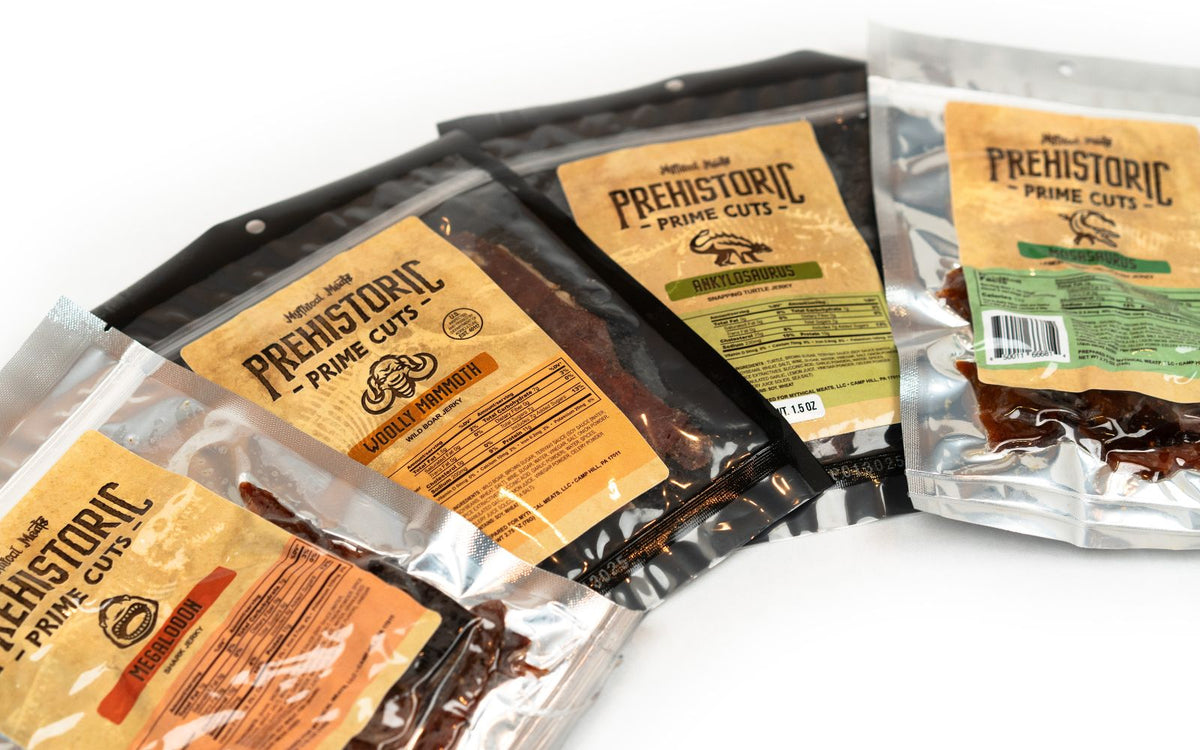
Prehistoric Prime Cuts, teriyaki-marinated wild boar, shark, turtle, and swordfish.
Meat Stick Collection, individually wrapped, built for backpacks and game nights.
Looking for jerky that's built to stay fresh from the first bite to the last? Explore the beef jerky collection to find your next favorite flavor. Small-batch, no MSG, no artificial flavors, made in the USA.
References
1. fsis.usda.gov/sites/default/files/media_file/2020-08/C31_NewTechnology_Final_Report.pdf
2. fsis.usda.gov/food-safety/safe-food-handling-and-preparation/meat-fish/jerky