


There's no single best beef jerky flavor, only the one that matches your palate. Most beef jerky falls into a handful of profiles, savory-smoky, peppered, sweet-savory, sweet-spicy, BBQ, and adventure proteins, and each one has a distinct failure mode to watch for. Start with the profile that fits how you actually eat, not the bag with the loudest label.
You bought a bag of beef jerky that looked great on the shelf. Bold label, promising flavor name, maybe a five-star review pulled you in.
Then you opened it. Too sweet. Too dry. Weirdly artificial. Whatever it was, you tossed the rest.
This happens a lot, and not because the beef jerky is bad. Most people just don't have a framework for choosing the right one, so they grab whatever's on sale or has the most stars and end up disappointed.
Ranking the best beef jerky flavors from top to bottom wouldn't fix that anyway, since taste is personal and a ranked list is a bad substitute for knowing what you actually want.
This is a decision system instead: what beef jerky flavors exist, what ruins them, and how to match your own preferences to the right bag the first time.
Find Your Lane First
Flavor disappointment comes from misaligned expectations. You expected smoky and got sweet. You wanted heat and got pepper dust with no depth underneath it.
The fix is figuring out what you’re into before you shop, not after you've already opened the bag.
Savory and Smoky
For anyone who reaches for grilled meats, smoked sausage, or anything campfire-adjacent. Good savory beef jerky tastes like actual smoke, not a chemical stand-in for it, and the flavor builds slowly instead of front-loading.
Seasoning stays minimal and deliberate: sea salt, garlic powder, maybe a touch of onion powder.
Hickory and mesquite produce noticeably different results if a brand names its wood. Hickory can be heavier and bacon-adjacent. Mesquite is sharper and a little sweeter.
If a label says "original beef jerky" or "old fashioned," this is usually the style. People who love this profile tend to dislike anything with noticeable sweetness, so if that's you, start here and wander with caution.
Peppered and Bold
Peppered beef jerky is not spicy beef jerky, and confusing the two causes a lot of bad purchases. Black pepper delivers a sharp, cracked pepper bite right up front.
It's aromatic and punchy, but the heat ceiling is low. You feel it on the tongue, maybe the lips, and then it fades. The flavor is about the pepper itself, not a sustained burn.
This is the lane for intensity without pain, and peppered beef jerky tends to be the most crowd-pleasing option at a group gathering. Buying for a mixed crowd and need a safe bet with some edge to it? Peppered beef jerky is the move.
Sweet and Savory
Teriyaki beef jerky is the elephant in this room. It dominates grocery shelves and is the most polarizing category out there, mostly because most commercial teriyaki beef jerky leans far too hard on sugar.
The soy-ginger backbone gets buried under brown sugar glaze and corn syrup, and what should be balanced turns into something closer to candy.
Good sweet-savory beef jerky lets sweetness complement the smoke instead of covering it up. The umami should come through clean, not get drowned. If brown sugar or corn syrup shows up in the first three ingredients, restraint is already missing.
Beyond teriyaki, this lane also covers Korean BBQ profiles built on sesame and gochujang, chipotle-bourbon blends, and bourbon-glazed options where the sweetness has real complexity behind it, less common on a grocery shelf, more common from craft producers.
Sweet and Spicy
This is where a lot of the more interesting spicy beef jerky lives, for people who want complexity, not just heat. It follows a specific curve: sweetness hits first, heat rises underneath, and the finish is warm rather than punishing.
Good sweet-heat beef jerky doesn't send you for water, it makes you reach for another piece. If you have a sweet tooth but still want real complexity behind the burn, this is the lane to explore.
- Mango habanero brings fruity sweetness against a clean, sharp burn
- Chipotle is smokier with a slower build
- Jalapeño stays bright and green-pepper mild to medium
- Red pepper flake blends run broad and familiar without one dominant pepper carrying the whole thing
- Carolina Reaper brings a touch of sweetness up front before a deep, lingering heat takes over
What separates good spicy beef jerky from bad is whether a brand uses real peppers or generic capsaicin extract, since extract delivers heat with none of the actual flavor behind it.
BBQ and Tangy
Sounds like a guaranteed win, and it's actually one of the riskier categories to buy blind. Many glazed BBQ styles are wet-marinated and heavily coated, which causes a sticky surface that can bother anyone who prefers a clean, dry chew.
"BBQ" itself is also doing a lot of unexamined work on a label, since it can mean mild Kansas City sweetness, sharp Carolina vinegar tang, or deep mesquite smoke, three very different experiences hiding under one word.
Adventure Proteins
Then there's the exotic meat category that doesn't fit neatly into any box: venison, elk, alligator, buffalo, unusual spice blends, flavors borrowed from cuisines you wouldn't normally associate with dried meat, taco seasoning, cajun spice, buffalo wing heat.
These are perfect for game night with people who think they've tried everything, a gift for someone impossible to shop for, or a long drive where you want every break to taste different.
The risk is real, an unfamiliar protein or a bold seasoning might not land for you. But when it does, it becomes the jerky you won't stop talking about.
What Ruins Good Jerky, Even When the Label Sounds Great
A bag can have a great flavor concept on paper and still taste bad. The three most common reasons have nothing to do with the seasoning name.
Hidden Sugar
Flip the bag over. Some brands split the sugar across three or four different names specifically to keep any single one from ranking too high on the list, that's a pattern worth noticing, not a coincidence.
Check the nutrition panel, not the front of the bag:
| Over 10g sugar per serving | Leaning sweet, whatever the flavor name says |
| 3g or under | Genuinely savory or smoky |
| 1-3g | The sweet spot, balanced without tipping into cloying |
| Zero sugar on the label | Usually means an artificial sweetener took its place, which can sometimes bring its own aftertaste problems |
Texture Problems
Flavor gets the attention, texture is what makes you stop eating. Soft and tender styles are moist with lower jaw fatigue, popular with newer jerky eaters, can feel underdone to traditionalists.
Old-fashioned styles run drier and firmer and require a lot of chewing, this is what most people picture when they think "jerky."
Thick-cut means bigger pieces and more meat-forward flavor per bite. Too dry crumbles like cardboard, that's a defect, not a style choice. Mushy usually means mechanically processed rather than hand-cut from whole muscle.
Good texture is firm but pliable, tears cleanly when you pull it, satisfying to chew without wearing out your jaw. Whole-muscle, straight-cut beef jerky almost always beats ground-and-formed on this front, so check the ingredient list for a named cut before you buy.
Anyone who's tried a jerky recipe at home knows how much the cut and thickness affect the final chew, it's not just the marinade doing the work.
Vague Ingredients
Look for specific spices (smoked paprika, not just "smoke flavor"), real marinades (soy sauce, Worcestershire sauce) instead of generic "seasoning," and salt sources that are named.
Best Flavors by Situation
Where and how you eat jerky changes what you should actually buy. A flavor that works at a desk doesn't necessarily hold up for a group or a five-hour drive.
Game night or group hosting
The worst move is one giant bag of one flavor, since tolerances vary and someone always gets left out. Build a flavor flight instead: one classic savory, one peppered, one sweet-heat, one wild card. Lay it out like a tasting board and let people self-select.
Gym, desk, and everyday protein snacking
You want a flavor that doesn't fatigue, which rules out anything too sweet, too spicy, or too layered. Savory-smoky and peppered are the safer lanes.
If macros matter to you, filter by the numbers before the flavor name: 8g+ protein per serving covers most quality jerky naturally, under 3g sugar keeps it low, under 5g total carbs works for keto, and gluten-free labels are worth double-checking since some marinades use soy sauce made with wheat.
Gifting
Works better than most people expect, if you don't lock in a single flavor for someone whose preferences you don't know well. A jerky gift box (curated, presentation-ready) reads differently than a plain variety pack (built for range and discovery over presentation), and either beats a bundle of full-size bags of one thing.
Look for a mix that includes one bold or unusual option alongside a few safer classics, that combination gives the recipient both comfort and something to try.
Where Mythical Meats Fits
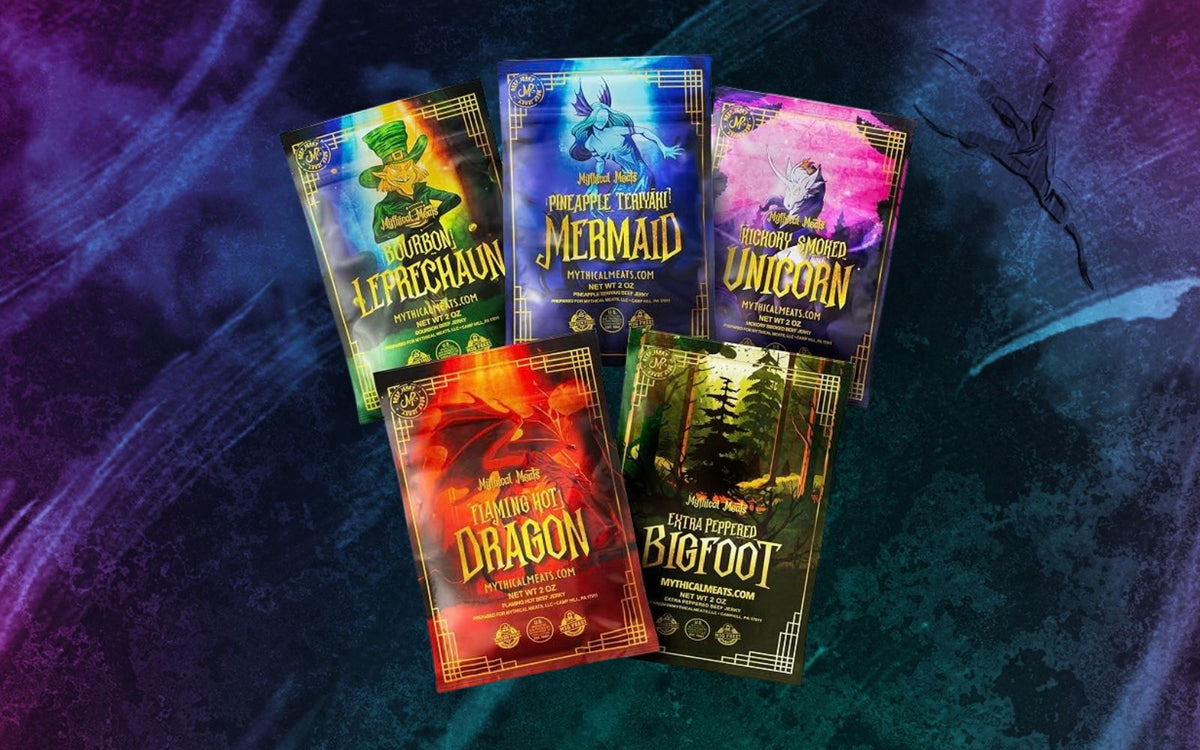
Once you know your lane, the next question is finding jerky that actually delivers on what the label promises. Our Beef Jerky Line is hand-cut, small-batch, made in the USA, and none of the five flavors list MSG on the panel.
The five cover most of the core profiles from above without you needing five different brands:
- Unicorn is the smoky, hickory-smoked pick.
- Dragon is the heat lane, built on Carolina Reaper.
- Mermaid is the sweet-savory, pineapple teriyaki option.
- Leprechaun leans bourbon-sweet.
- Bigfoot is the peppered one.
Worth knowing before you shop: smoke method and a few other specifics vary by flavor rather than following one blanket standard across the line, so check the individual panel on whichever one you land on.
Where to Start
Already know your lane from the sections above? Our Beef Jerky collection covers smoky, fiery, sweet, bourbon, and peppered in five bags.
Check out our meat sticks, they’re what we are known for. The Original Variety Pack is ten sticks, ten flavors, gluten-free.
Full lineup: shop.mythicalmeats.com
Frequently Asked Questions
What are the most popular jerky flavors?
Original and smoky flavors lead in volume because they appeal to the broadest audience. Peppered and teriyaki jerky and meat sticks follow closely behind, with teriyaki especially dominant in grocery and convenience stores.
Spicy varieties like jalapeño, mango habanero, and red pepper blends have grown significantly in recent years.
What's the best jerky flavor if I don't like sweet?
Stick with savory-smoky or straight peppered. Both rely on smoke, salt, garlic, and black pepper rather than a sugar-based marinade. Check the nutrition label before buying regardless, since "peppered" on the front doesn't guarantee a low sugar count on the back.
Is teriyaki jerky sweet?
Usually, yes. Traditional teriyaki balances soy, ginger, and a small amount of sugar, but most commercial versions lean harder on corn syrup or brown sugar to build a heavier glaze.
If you want the umami without the heavy sweetness, look for a sugar count under 4g per serving on the actual panel rather than trusting the flavor name.
What's the difference between peppered and spicy jerky?
Peppered delivers a sharp, cracked-pepper bite that's aromatic and punchy but fades fast, the heat ceiling is low.
Spicy jerky uses chili peppers, cayenne, habanero, or capsaicin to build sustained heat that lingers well past the bite.
Why does some jerky taste artificial?
Usually traces back to one of two things: synthetic sweeteners leaving a chemical aftertaste, or vague "natural flavors" replacing specific real ingredients.
Should I buy a variety pack first?
Almost always the smarter first purchase from any jerky brand you haven't tried. A single-bag purchase locks you into one flavor with no fallback if it misses.
A variety pack or gift box lets you sample multiple profiles, figure out what you actually like, and buy with confidence from there. It also works better for groups and gifting, since it sidesteps guessing at someone else's taste.